






The drop shot rig is hardly a new invention, and just about every lure angler has heard of it by now. Yet there are still plenty of anglers who feel uncertain about it — unsure how and in which situations to use a drop shot rig. They don't fully trust it and stick to tried-and-tested methods instead. That's a mistake, though, and on some days it can be the difference between success and failure on the water. I've had plenty of sessions where classic jigging or slow-rolling produced not a single bite, yet the drop shot rig delivered fish after fish — because the zander and perch simply wanted a completely different presentation that day.
For that reason, I'd like to share some valuable tips on fishing the drop shot rig and explain in detail when and how to use it properly.
Enjoy the read!

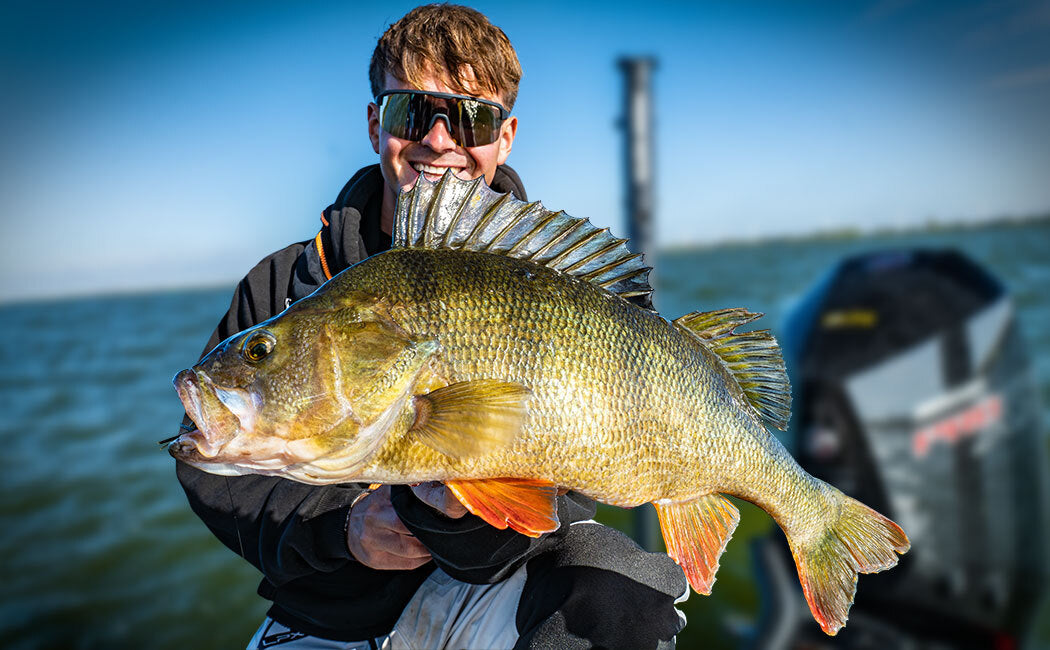
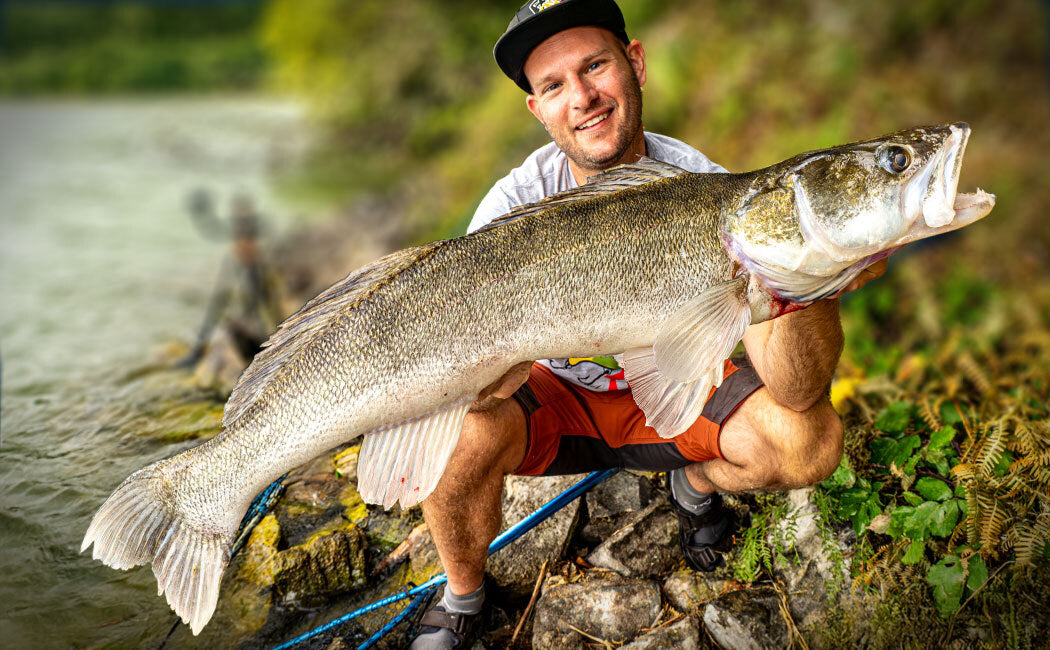
Florian Penno: A cracking perch on the drop shot rig
What Is the Drop Shot Rig and When Should You Use It?
The drop shot rig keeps your lure suspended at a defined distance off the bottom — it neither sinks nor rises. You can work it almost completely on the spot, which can make all the difference on many days. This is made possible by a combination of a specially knotted leader and a weight designed specifically for the rig. I'll cover how to tie it best a little later.
Reach for the drop shot rig whenever fish are sluggish and reluctant to bite for whatever reason. Extremely snaggy terrain or dense weed on the bottom can also make it the smart choice. In short, this method comes into its own whenever fish show no inclination to chase a fast-moving lure and need more time to commit to a bite — or in situations where jigging along the bottom isn't practical.
It's also worth considering for vertical jigging, where keeping a defined distance off the bottom is important. The rig can actually make presentation much easier here, since you can go heavier on the weight and maintain bottom contact with far less effort.
Beyond the situations described above, give the rig a go on days when things are generally slow and you're not sure why. You may well be surprised by what suddenly becomes possible.
How to Set Up the Drop Shot Rig
At its core, the drop shot rig consists of a length of fluorocarbon leader material and a single hook. Choose the line diameter to suit the conditions, but never go too light — the hook is tied in the middle of the leader, which puts constant load on the line. For perch, I never go below 0.219 mm diameter on my drop shot leaders, and for zander on the Elbe I prefer 0.34 or 0.37 mm. These diameters have proved their worth and hold up very well. It's important to use good-quality fluorocarbon with high knot strength. I reach for FC leader materials from Sunline, Stroft, Seaguar or Predax, for example. I'd stress here that you should genuinely use dedicated leader material. Fluorocarbon main lines are cheaper, but they don't offer the same abrasion resistance as purpose-built leader materials.

Components of the rig at a glance:
- Fluorocarbon leader between 0.219 and 0.55 mm (thicker is possible too, though it becomes harder to knot)
- Hook (wacky hook, drop shot hook, offset hook)
- Drop shot weight (shape and material to suit conditions)
- Leader ring for connecting to the main line
Choosing the Right Hook for Drop Shotting
Hook choice depends on the situation. I most often use what are known as wacky hooks. These stand out for their extremely wide hook gap and very short shank. I use wacky hooks whenever I nose-hook my lures — my preferred method. The wide gap leaves plenty of room to hook fish cleanly. They come in a range of sizes and wire gauges; when targeting zander in particular, I pay close attention to using stouter wire models.
Alongside wacky hooks, I occasionally use dedicated drop shot hooks, which have a slightly narrower gap and a marginally longer shank than wacky hooks. They're usually offset as well. They work just as well, especially when you're targeting perch specifically. For zander fishing, I personally prefer wacky hooks.
When I want to fish through weed, I like to use offset hooks on the drop shot rig and mount the lure properly on the hook. The risk of missed bites does increase, but when the weed is very dense, it at least gives me the chance to present the lure weedless for a while and provoke bites that would otherwise never come due to the hook picking up plant material.
In summary:
- Wacky hooks as a strong all-rounder for zander fishing
- Drop shot hooks for perch fishing
- Offset hooks for fishing in weedy areas
Leader Length and Hook Positioning
This comes down to personal preference. I normally keep my leaders around 70 cm long, though it depends very much on where I'm fishing. In shallow water where fish are holding close to the bottom, shorter leaders are common. If you want to present the lure well above the bottom, go longer.
I usually tie the hook in the middle of the leader using a dedicated drop shot knot, which is very easy to learn. I've documented this knot step by step in the photos so you can tie it yourself with ease.
IMPORTANT!
The hook should always be tied in with the hook point facing upwards.
At the top of the leader I attach a small leader ring. This serves a dual purpose. When I want to switch quickly between rigs and techniques on the water, I usually fish with a small but very strong snap on my main line (or on a FC section if I'm using braid as my main line). I can simply clip the leader ring of the drop shot rig onto it and swap back to other rigs or straight to a jig head in seconds. You can achieve this with a loop at the top of the leader too, but there's a risk of the loop wrapping awkwardly around the snap and inadvertently opening it under tension — something that can't happen with a small leader ring. Alternatively, you can tie the ring directly to the main line for an equally secure connection between main line and rig.
The lower end of the leader needs no further preparation, as drop shot weights feature clip eyes that you simply insert the bottom of the leader into. This also lets you vary the distance of the lure from the bottom quickly while fishing. And that's your drop shot rig ready to go.

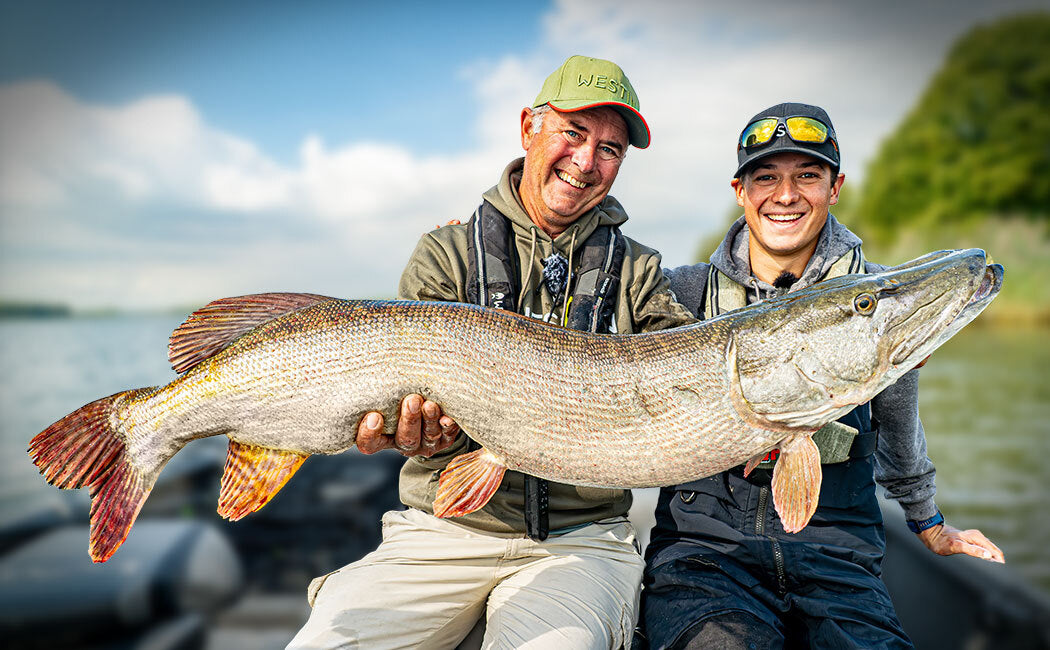
Florian Penno: Elbe zander like the drop shot rig too.
A Brief Word on Line
When it comes to line choice for drop shotting, your options are flexible. With lighter weights when fishing for perch, I'm very happy using fluorocarbon as my main line. It works a treat, though it's by no means necessary — that's simply my personal preference. Otherwise, feel free to stick with your usual braid when fishing the drop shot rig.
The Right Weight
These days I use tungsten weights exclusively. Their high density keeps them nice and compact, and they give the best feedback about bottom structure. In practice, though, it makes very little difference whether you use lead, tungsten, brass or steel weights — the differences in properties are minimal.
More important is choosing the right shape. When fishing in fast-flowing water, such as the tidal Elbe, I rely almost exclusively on drop or ball-shaped weights. In still water, I much prefer cylindrical rod-shaped drop shot weights. The reasoning is straightforward. Drop and ball weights concentrate their mass into a compact form and hold the rig on the bottom far more reliably in stronger currents, where rod-shaped weights would need to be considerably heavier to achieve the same effect.
In the absence of current, where that consideration becomes irrelevant, I like to make use of an additional feature of rod-shaped weights. They act like a roly-poly and keep tipping over during the retrieve, giving the lure a little extra movement that can have a genuinely positive effect.
Two further characteristics of each shape are worth a quick mention. Rod-shaped weights are less prone to snagging and glide more easily through weedy sections. They also sink less readily into soft muddy bottoms than ball or drop-shaped weights.
The Right Rod for Drop Shot Fishing
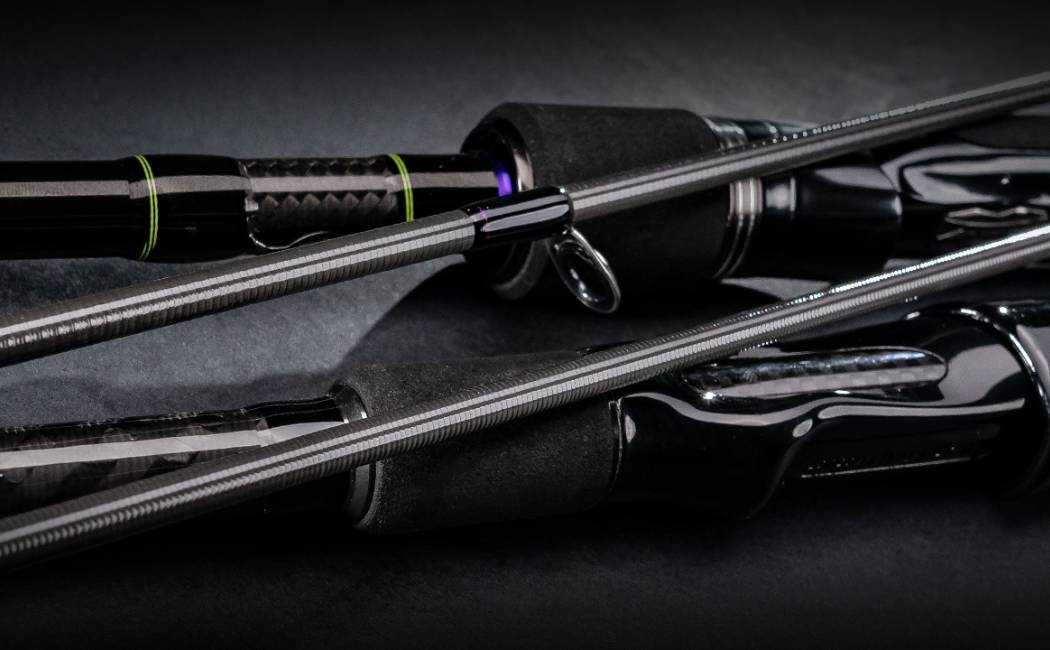
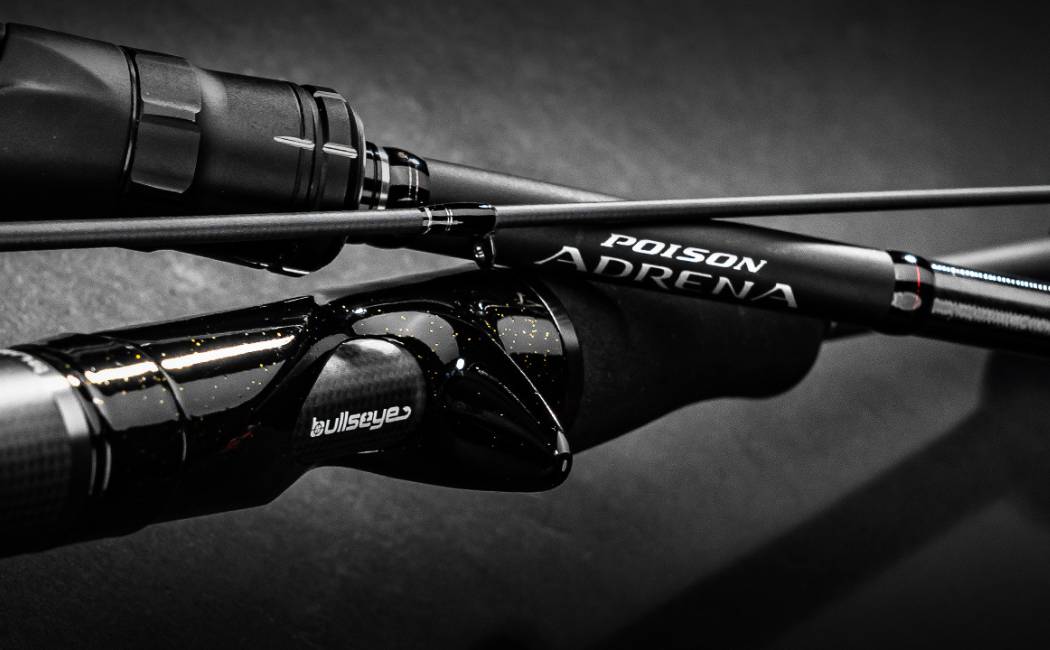
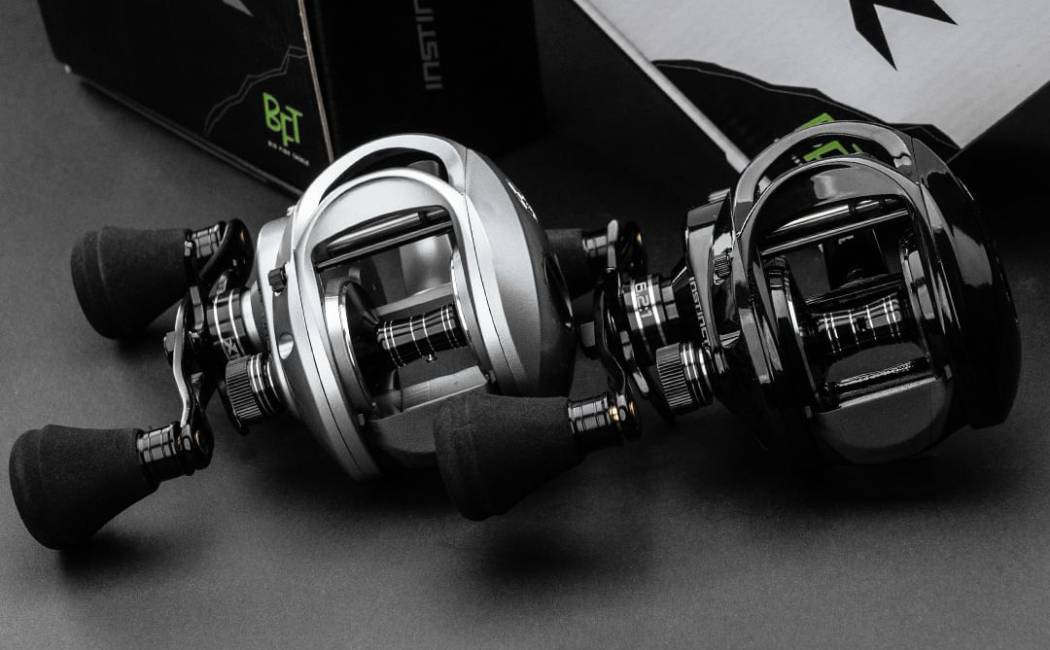
Now that the rig setup is sorted, the next question is which rod to use. In principle, you can fish the drop shot rig on any spinning rod with sufficient sensitivity. That said, certain rods lend themselves particularly well thanks to their specific characteristics.
Baitcasting Rod or Spinning Rod?
First, decide whether you'd rather use a baitcasting rod or a spinning rod. This is largely a matter of taste, though it's worth mentioning that drop shot rigs, with their longer pendulum, aren't quite as easy to cast on a casting rod. That doesn't bother me at all — I fish casting rods about 98% of the time, so it's perfectly doable. A spinning rod is slightly more comfortable for this, though.
Rod Taper
Once that's settled, turn your attention to the right rod taper. Rods with an extra-fast taper are an excellent choice here. The sensitive tip ensures good bite detection, and the fast-loading backbone allows for a quick, powerful strike. The tip should not be too stiff — the whole point is to work the rig on the spot for extended periods, and a tip that's too hard will shift the rig during animation, which is rarely what you want. An extra-fast taper therefore offers advantages in terms of animation, bite detection and striking.
Rod Length
The rod should also not be too short, since the rig itself has a certain length and can't be wound in through the tip ring. From around 2 metres upwards you're on safe ground, and a little longer does no harm at all.
With that, you've found the right rod for drop shot fishing.
The Best Lures for Drop Shot Fishing
In principle, you can use virtually any soft lure for drop shot fishing. The only real exception might be very large soft plastics, which simply aren't practical. But lures between around 1 and 17 cm can certainly be fished on a drop shot rig. Most of the time I fish smaller lures up to about 12 cm, or very slender ones up to 15 cm.
My clear preference is for pintail and V-tail soft lures (or soft lures with a mini paddle tail), followed by slender creature baits. Less frequently I'll put crayfish imitations or shads on the drop shot hook. That's my personal preference, though — standard soft plastics catch perfectly well on the drop shot rig too. I tend to avoid crayfish mainly because it's not in a crayfish's nature to hover half a metre above the bottom. Fish occasionally don't care, and if it catches, it catches.
In my view, pintails and V-tails simply present the most beautifully on the drop shot rig.
My favourites:
- Illex iShad
- Illex iShad Tail
- #LMAB Bleak Pintail
- #LMAB Finesse Filet
- Illex Scissor Comb
- X Zone Lures Pro Finesse Slammer
- Strike King Caffeine Shad
- Keitech Shad Impact
- DStyle D1
- Noike Kemnpa
- Noike Machobee
As already mentioned, I usually rig these lures with a nose hook — simply pushing the hook point up through the lure just in front of the nose. It helps if the lure doesn't have an excessively thick nose section, as that leaves very little room in the hook gap and you'll lose fish during the fight. A nose section that's too thin or too soft isn't ideal either, as the lures will tear off easily and you'll get through them quickly.

Florian Penno: An Elbe perch that couldn't resist the drop shot rig.
Scented and salted lures are also well worth considering for drop shotting, as fish tend to hold onto them longer when they bite, giving you more time for a successful strike. All of the lures listed above are either salted, scented or both. If you prefer to fish unscented lures, there's nothing to stop you treating them afterwards with an attractant such as Illex Nitro Booster. Bear in mind, though, that this needs to be reapplied regularly during the session, as externally applied attractant washes off in the water — unlike the scent built into impregnated lures.
Working the Drop Shot Rig Effectively
The way you work the drop shot rig is one of the keys to success. Many anglers are too frantic, too impatient, or simply lack confidence in a lure that barely moves. Cast the rig out and wait for the weight to reach the bottom. Then begin the fairly subtle retrieve. How you work it depends on whether you're targeting a specific spot or covering ground.
If you want to cover water, drag the rig slowly along the bottom and pause it at regular intervals. During these pauses, twitch the rod tip gently, ideally without moving the weight at all. That way only the lure above is working. Keep slackening the line slightly and nudging the rod into the line — the lure will lift and drop in very small movements while waving its tail enticingly. Bites usually come during the still phases rather than when you're moving the rig. If nothing happens, drag it forward a metre and pause again. You'll realise from reading this that patience is genuinely an asset with this technique.
If you want to fish a specific spot, you can twitch the rig in one place for minutes on end. You'd be amazed how long bites can take to materialise. Zander in particular can be extremely selective and take minutes to commit to a bite. Jigs often pass straight by these fish. With the drop shot rig and a slow presentation, many will still take.

There are plenty of variations on this approach, of course. Rather than dragging the weight, you can also jig the drop shot rig aggressively — the lure then dances in bigger hops, which perch in particular often love. In stronger current, you sometimes don't need to do anything at all — just let the flow carry the rig and wait for the take. If the current is coming towards you, the minimum retrieve speed is effectively set for you. In that situation, drop shotting has a real advantage, as you can feel bottom contact far more easily than with a jig head.
The rig also works perfectly for vertical jigging. The correct distance off the bottom is always maintained, provided you have the weight touching the ground — and since you can go considerably heavier with the weight here, that's genuinely easy to achieve. The lure runs effortlessly above it and is readily inhaled by any predators below.
Once you've hooked a fish, things get exciting. Wind quickly and keep constant pressure on the fish, as the drop shot hook will otherwise work its way free from the predator's mouth — a consequence of the weight hanging below. With a bit of practice, though, even that becomes second nature.
Tips
A Few Insider Tips for Drop Shot Fishing
- Lures rigged nose-hook style present by far the best action, but they do have a habit of flying off the hook during the fight. To cut your lure losses close to zero, there's a neat little accessory called a Final Keeper — a small, unassuming piece of plastic that looks like a tiny arrow. Following the instructions, push it into the nose section of the soft lure from the front, where it sits very securely. Then simply thread the hook point through the small opening of the Final Keeper, and the lure is locked firmly in place.
- If you're fishing a water with a strong pike population, you don't have to abandon the drop shot rig. You should, however, set up a pike-proof version. There are dedicated drop shot hooks for this purpose, mounted on a swivel with two different eyes. The top eye accepts a wire trace connecting to the main line, secured with crimps. The bottom eye is the familiar clip eye found on drop shot weights — simply clip in a length of mono or fluorocarbon at the desired length and attach the drop shot weight at the bottom. That's your pike-proof drop shot setup ready to go.
- Sometimes a drop shot rig with a side arm fishes even better. Tie a dropper loop in the leader to form a loop and attach the hook to it. Alternatively, you can tie in a separate side arm for the hook, which gives the lure even more freedom of movement.
Summary
The drop shot rig catches fish. Millions of anglers around the world have proved that many times over. So have the confidence to try this effective method and stick with it. On days when jigs are drawing a blank, the drop shot rig can spring some remarkable surprises. Stay patient and wait for the takes — they will come, without a doubt.

